Guiding admins through reverse proxy setup
A design proposal sequences proxy setup around its dependencies, then keeps guidance available when an admin returns to maintain the configuration.
- Status
- Design proposal with mock-data scope. Screenshots show the existing hosted prototype. Guided setup and user outcomes remain unverified.
Creating a record is only the beginning
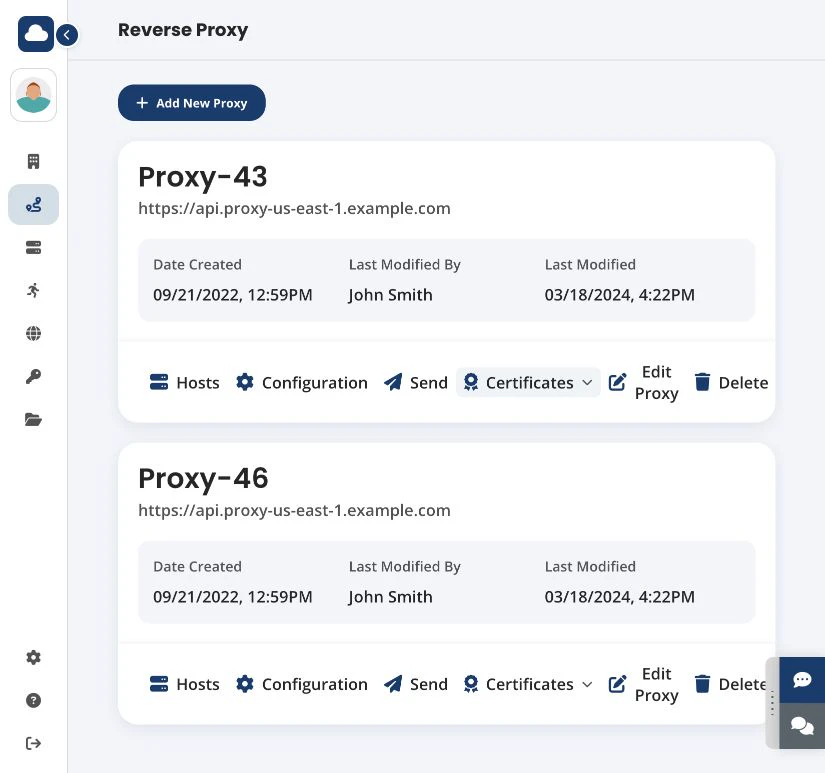
The project notes describe an admin starting with Add New Proxy, entering an API address and key, and receiving a proxy record. Completing the setup still requires a certificate, a host associated with that certificate, and a location that routes a path to an internal app.
The existing interface exposes those objects through separate controls and screens. An experienced admin can navigate that structure. A first-time admin has to discover the dependency chain while configuring it.
The design proposal makes that chain the structure of the first setup, then carries the explanation into everyday maintenance.
Make the dependencies visible
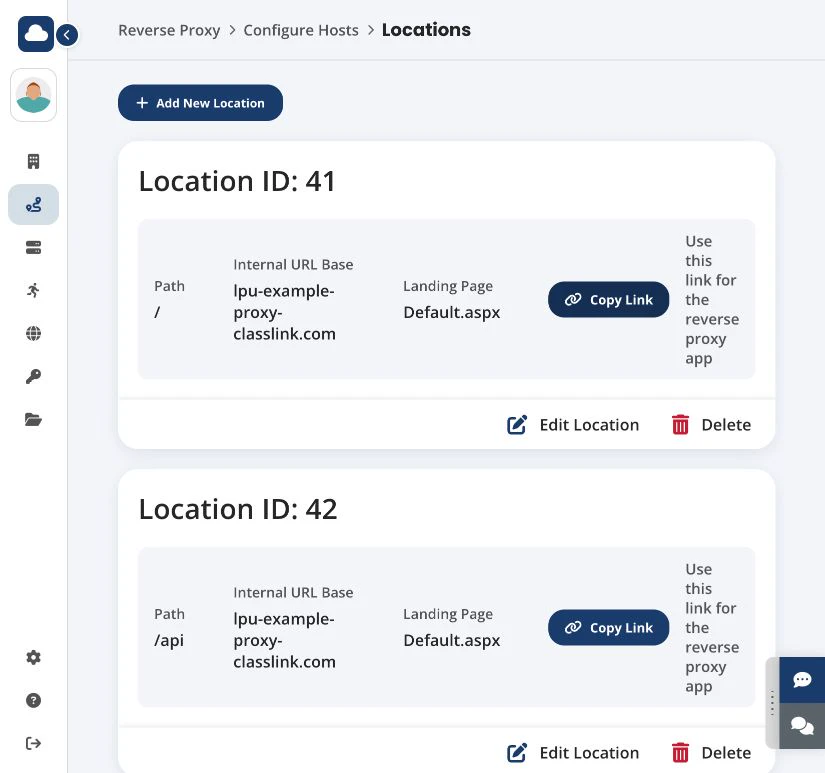
A proxy contains hosts. Each host can use a certificate for HTTPS and contains locations that route URL paths to internal apps.
The proposed welcome step explains that relationship before asking for configuration details. A short sequence follows the traffic from the internet through the proxy, into a host and location, and on to the internal app. The certificate appears with the host it supports.
This gives each form a purpose. The admin can understand why a certificate comes before the host and why adding the proxy alone leaves work to do.
Guide the first complete configuration
The proposal uses six steps, with current, completed, and upcoming states in a side rail.
- Welcome. Explain the objects and their relationship. Offer a way to skip guided setup.
- Name your proxy. Collect its name, API address, and key.
- Add a certificate. Collect the certificate, intermediate chain, and key paths with explanatory copy.
- Add a host. Associate the host with the certificate from the preceding step. Show that association and default HTTPS to on.
- Add a location. Ask for the path and internal destination. Put raw Apache configuration inside an Advanced disclosure.
- Review and create. Summarize the proxy, certificate, host, and routing path together. Offer the generated configuration for inspection.
Per-step validation keeps required information close to the place it is entered. Back navigation lets the admin correct an earlier value before reviewing the whole configuration.
The second revision addresses the next visit
A wizard can explain the first setup and still leave a returning admin struggling to maintain it. Revision 2 extends the same framing into the existing management screens.
- A collapsible concept legend repeats the object relationships on the proxy, host, and location views.
- A completeness indicator shows which configuration pieces exist. Missing pieces link to the appropriate add flow.
- Help inside the drawers explains the purpose of a host, certificate, or location where the admin edits it.
- A Show tips control lets experienced admins adjust how much guidance they see.
The key design decision is continuity. The first setup introduces a model that remains available when the admin returns to add another host or repair an incomplete configuration.
Describe completion precisely
The plan proposes a “Live” label when certificate, host, and location records are present. That condition establishes configuration completeness. Operational readiness would also need evidence from validation and connectivity checks.
For the case study’s proposed indicator, Configuration complete is the more precise label. Whether the proxy successfully routes traffic is a separate status to establish during implementation.
What the evidence supports
The brain contains an initial wizard plan and an expanded revision for returning users. Both define a visual interaction prototype using mock data.
The hosted CMC preview was inspected on November 17, 2026. It exposes the existing proxy list, certificate section, hosts table, and locations view. The screenshots document that baseline. Guided setup, completeness links, persistent guidance, and successful traffic routing remain unverified.
A focused admin study would ask a participant to explain what remains after creating a proxy, complete a first configuration, and later add a location to an existing host. Misunderstood dependencies, incomplete configurations, and requests for help would show where the guidance needs revision.
Project sources and scope
- Reverse Proxy — First-Time User Wizard. Describes the existing setup problem, six proposed steps, mock-data scope, validation, and a review step.
- Revision 2 — Ambient guidance for returning users. Adds the concept legend, completeness indicators, links to missing configuration, and contextual help.
- Reverse Proxy — First-Time User Wizard implementation plan. Provides the component-level plan and intended verification steps.
- Hosted CMC Reverse Proxy prototype, inspected November 17, 2026. Supplies the baseline screenshots and observed navigation.
The completeness-label refinement is an interpretation developed for this case study. Individual contribution, implementation of the proposed changes, and participant outcomes still need confirmation.