Selected work
-
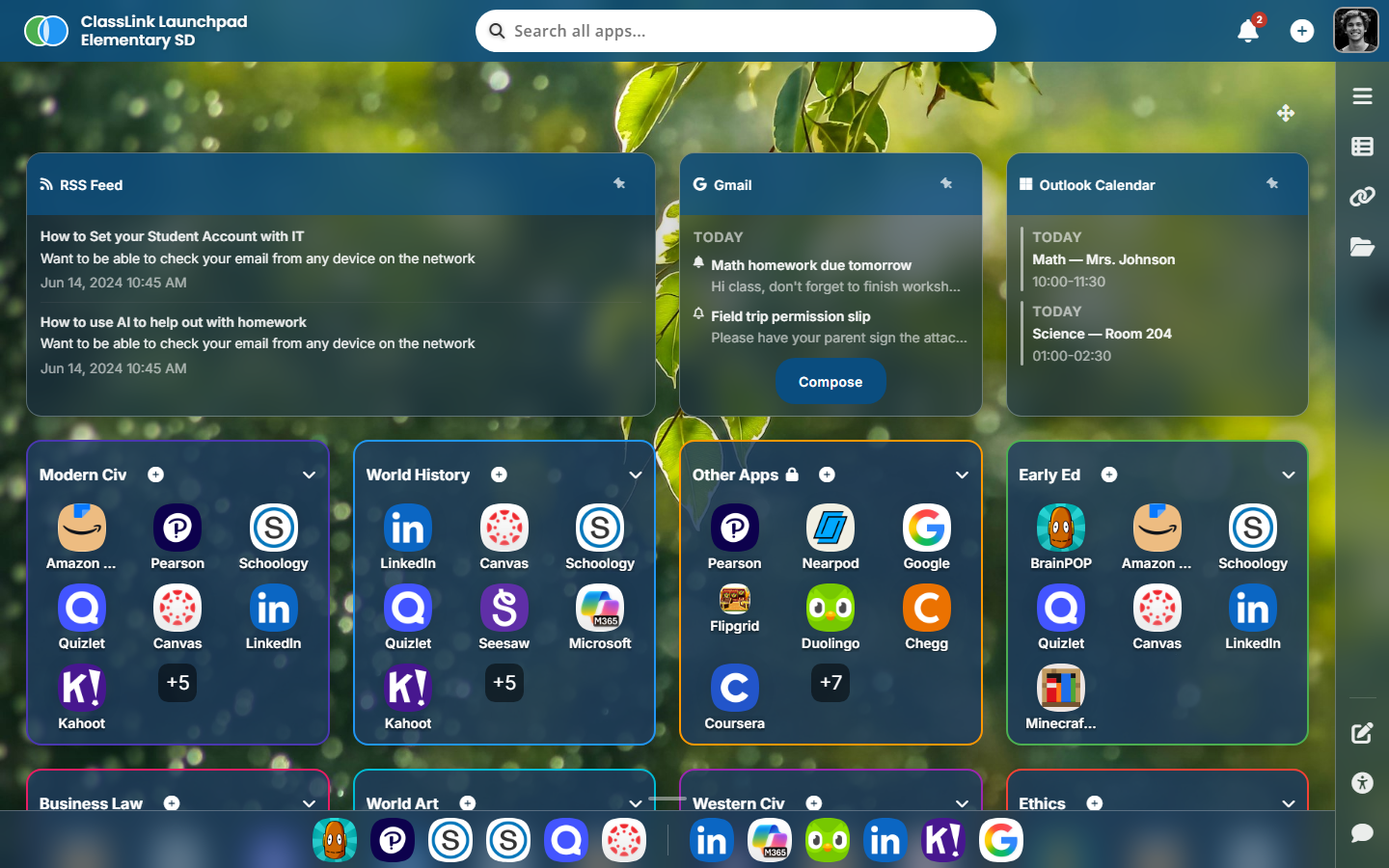
ClassLink Launchpad Prototype
I designed and built three layouts for ClassLink's K-12 app portal, with a simpler app surface for early learners and customizable layouts for older students and teachers.
Read case study → -
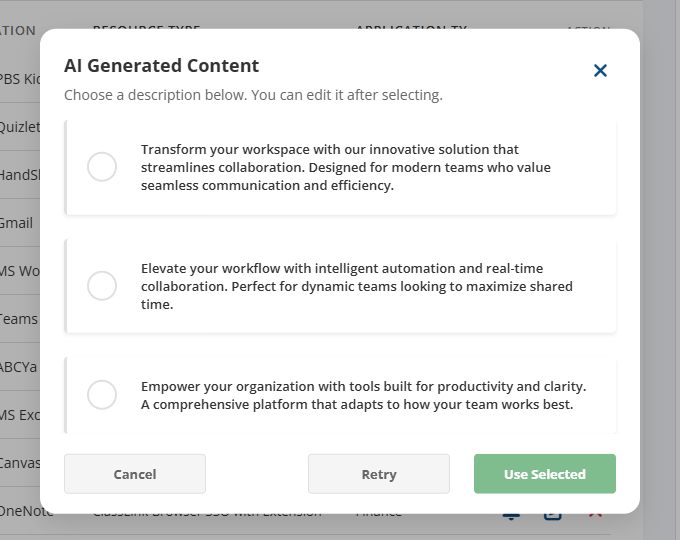
AI inside the App Detail drawer — three drafts, never one
I designed and prototyped a draft picker for district admins writing app descriptions. They can compare three sample drafts and edit their choice. Existing text stays in place until they confirm.
Read case study → -
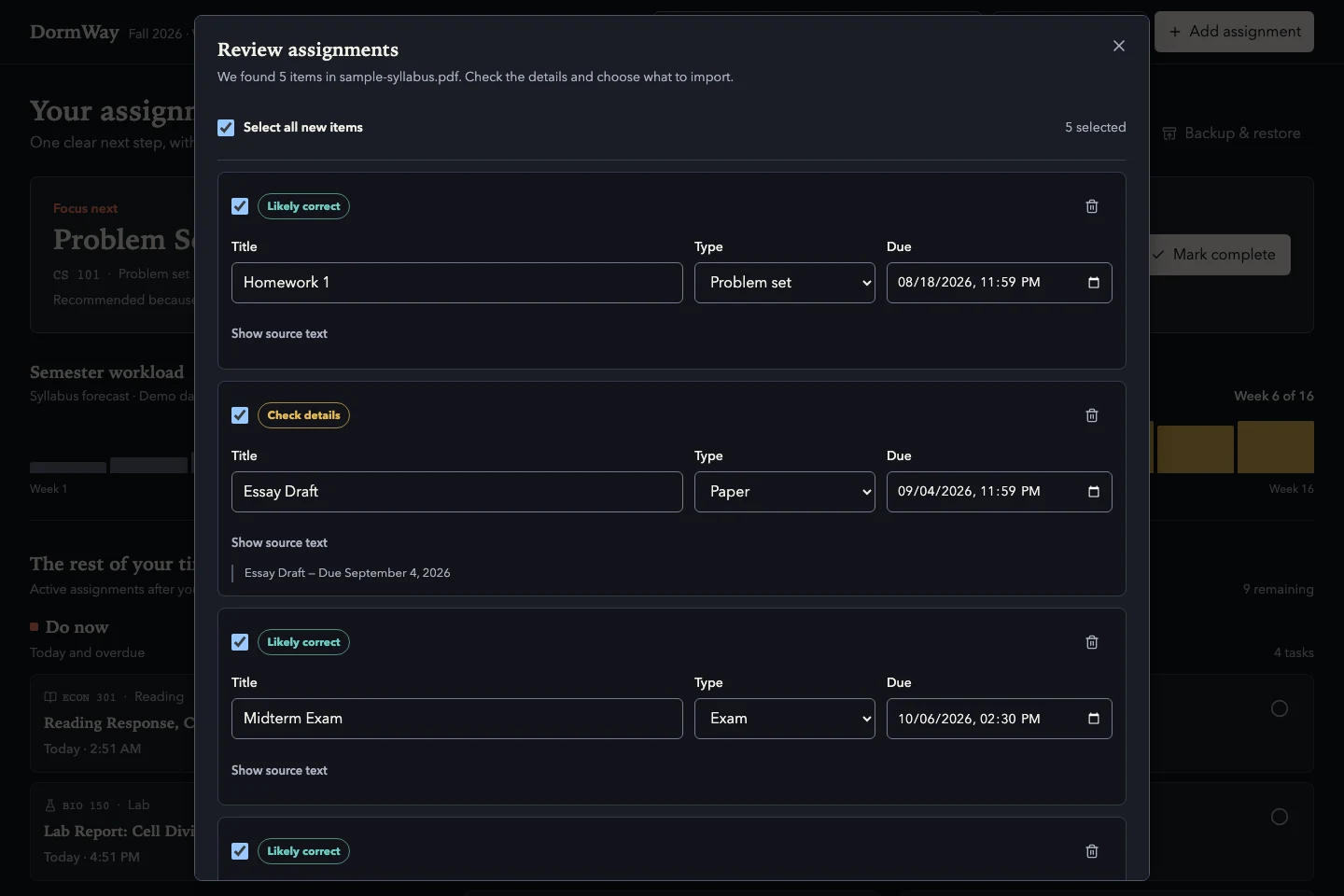
DormWay helps students turn a syllabus into a plan
An independent EdTech project that turns a syllabus into a set of assignments students can review, correct, and add to their timeline.
Read case study → -
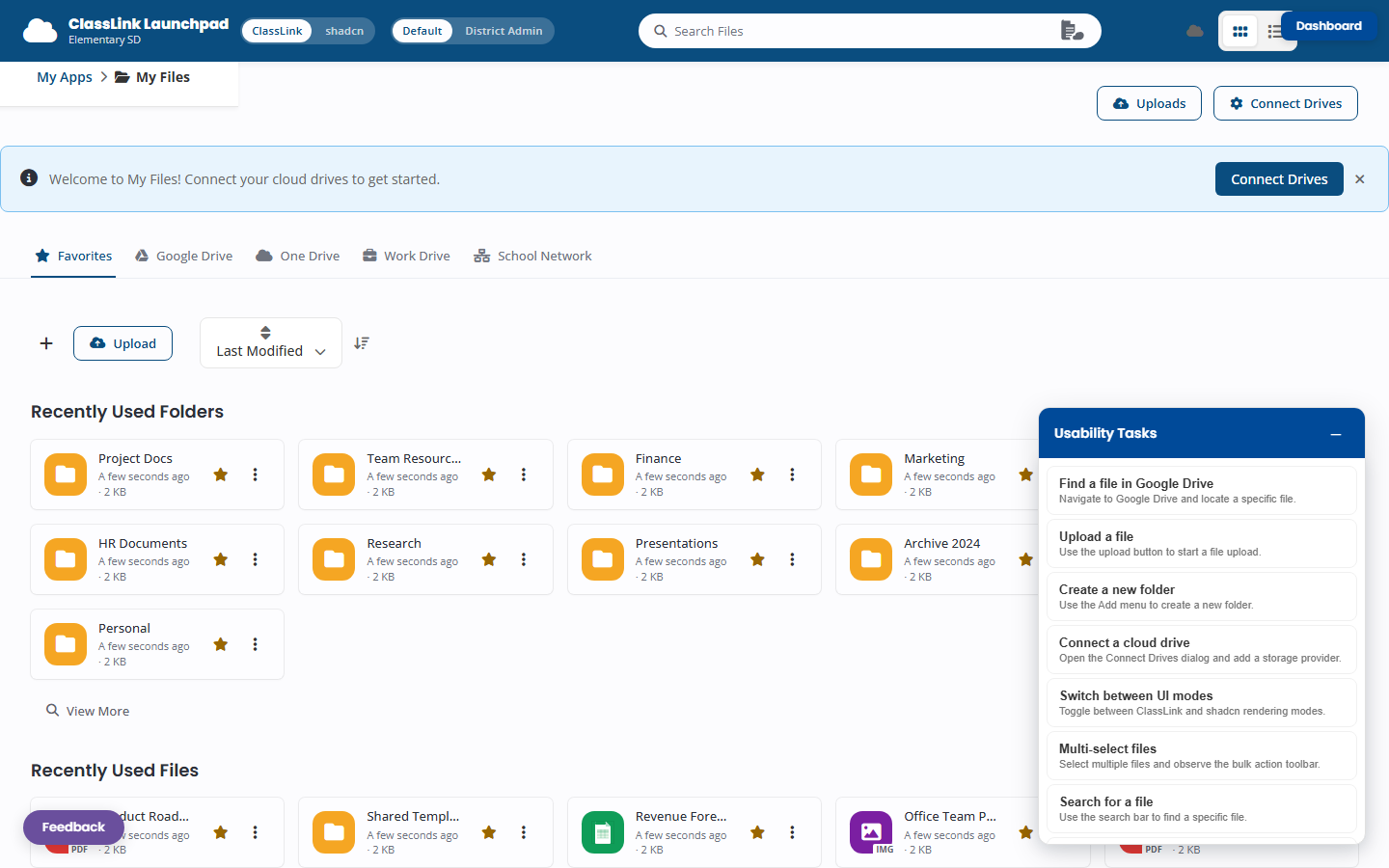
my-files-usability — research harness
The documented My Files research harness combines task guidance, local event capture, and automated checks to prepare for moderated sessions.
Read case study → -
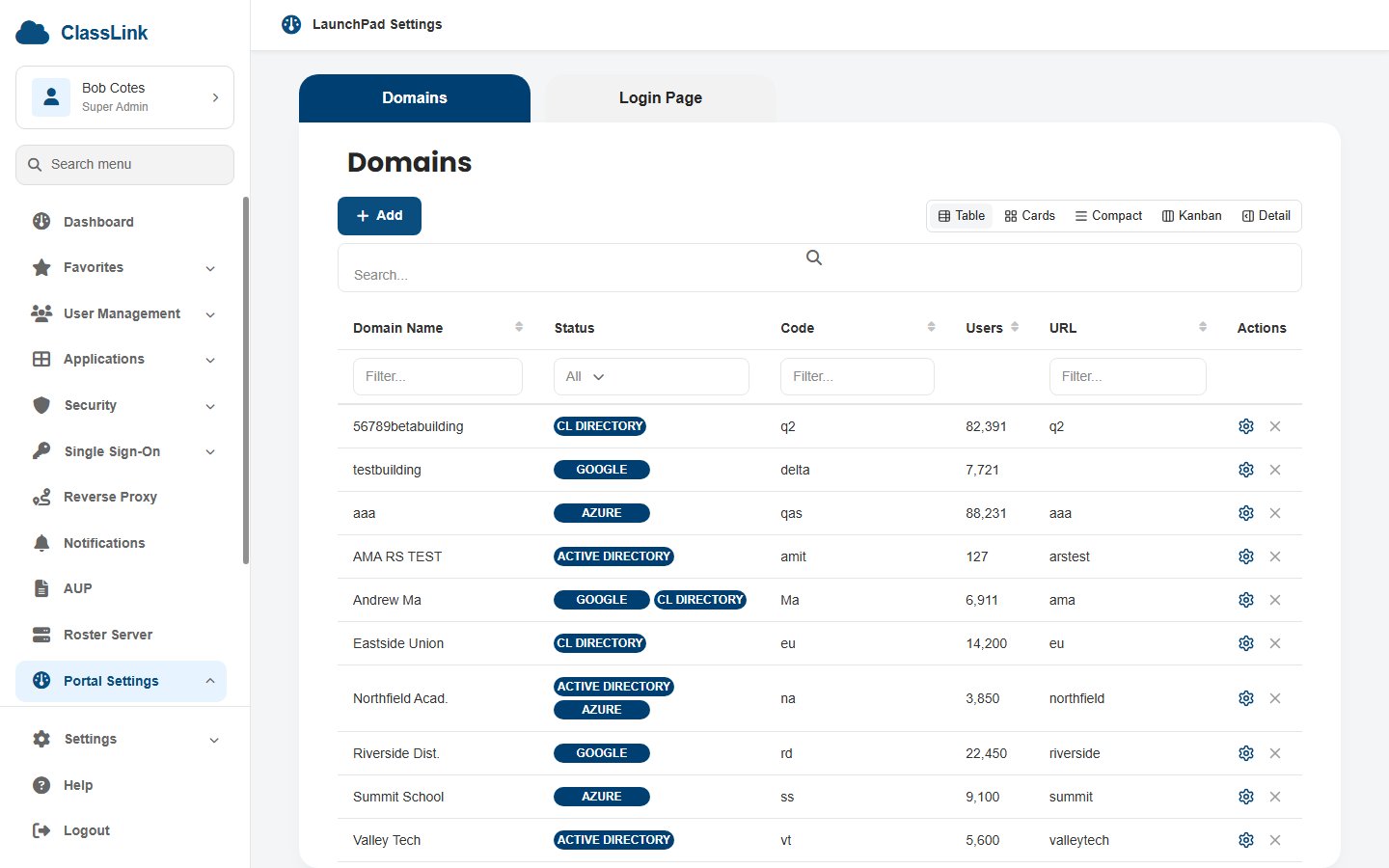
DataView picker — five views, one source
A shared view-picker design for ClassLink’s admin console uses the shape of a dataset to decide which browsing modes to offer.
Read case study →
Browse the case study archive
-
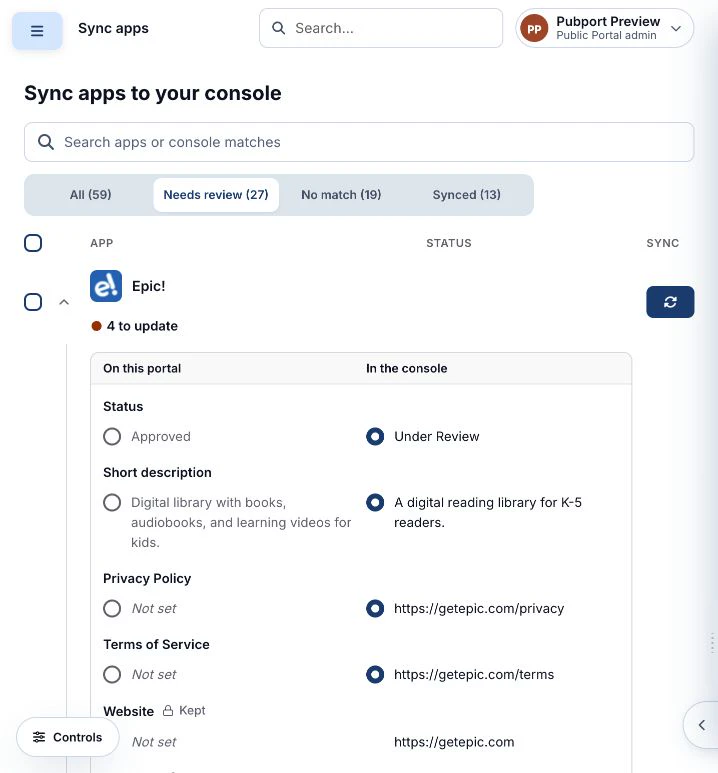
Reviewing app changes before they reach the console
A Public Portal prototype gives admins a queue of app differences, a comparison of values from both sources, and a field-level choice before syncing.
Read case study → -
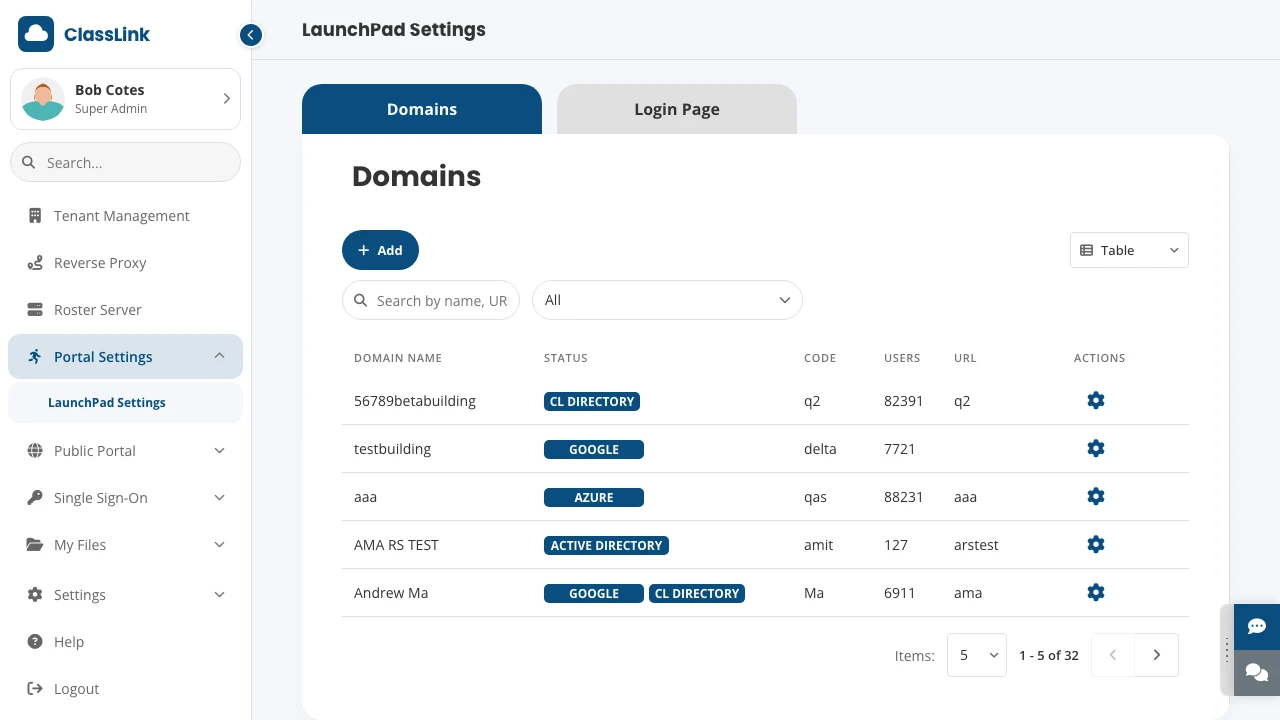
domains-cmc-module — D+ → A- in seven passes
The admin console nobody enjoys, pushed from a D+ skeleton to an A- through seven /ux-review-loop passes — every grade, every pass, every dimension delta on file. This is the real arc behind the D→A claim on this site.
D+ / 52 A- / 90Read case study → -
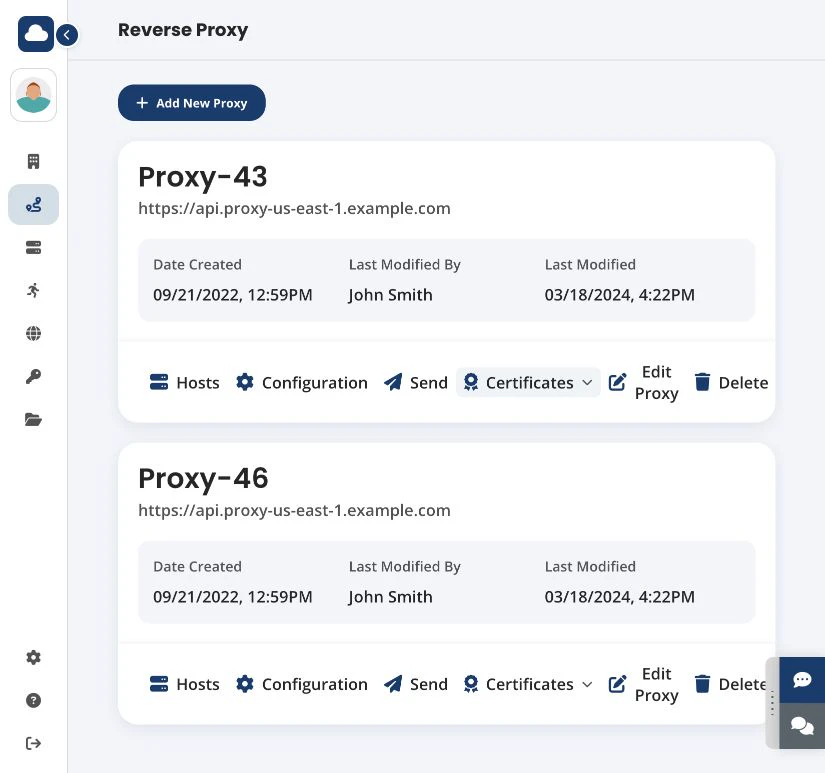
Guiding admins through reverse proxy setup
A design proposal sequences proxy setup around its dependencies, then keeps guidance available when an admin returns to maintain the configuration.
Read case study → -
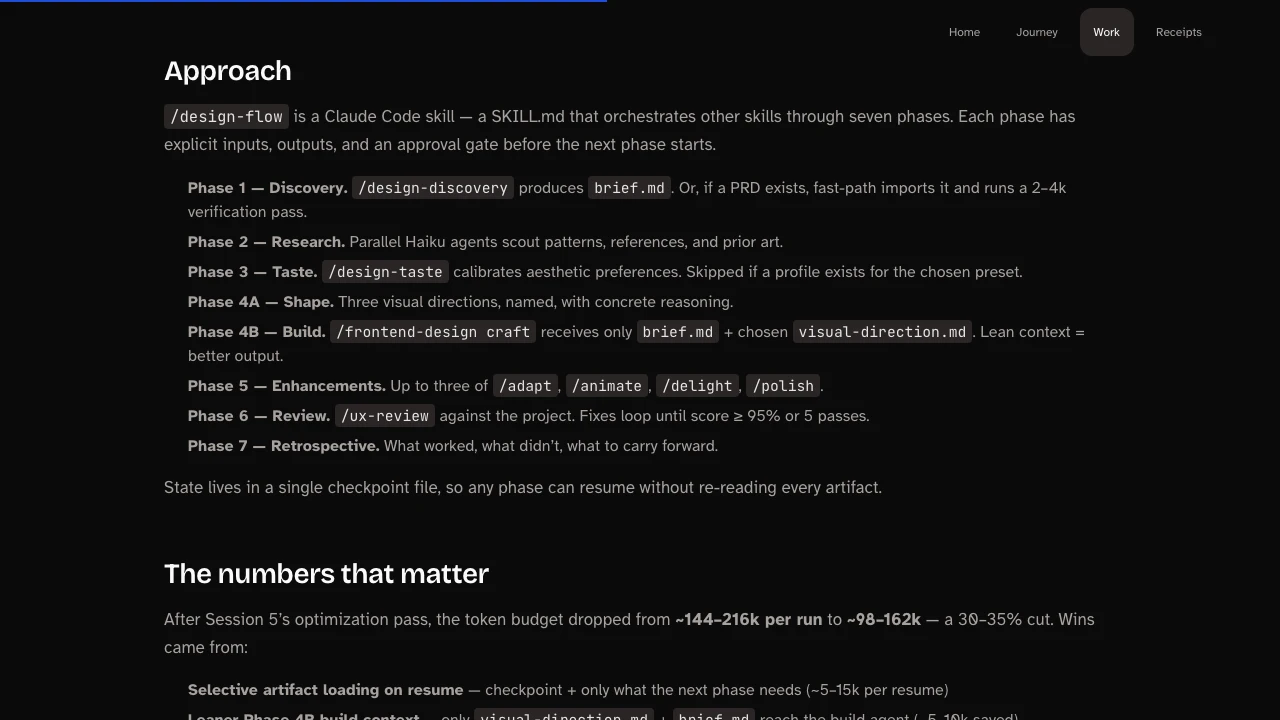
/design-flow — the meta-artifact
AI-assisted design workflow that structures discovery, research, prototyping, review, and iteration into a repeatable product-design loop.
Read case study → -
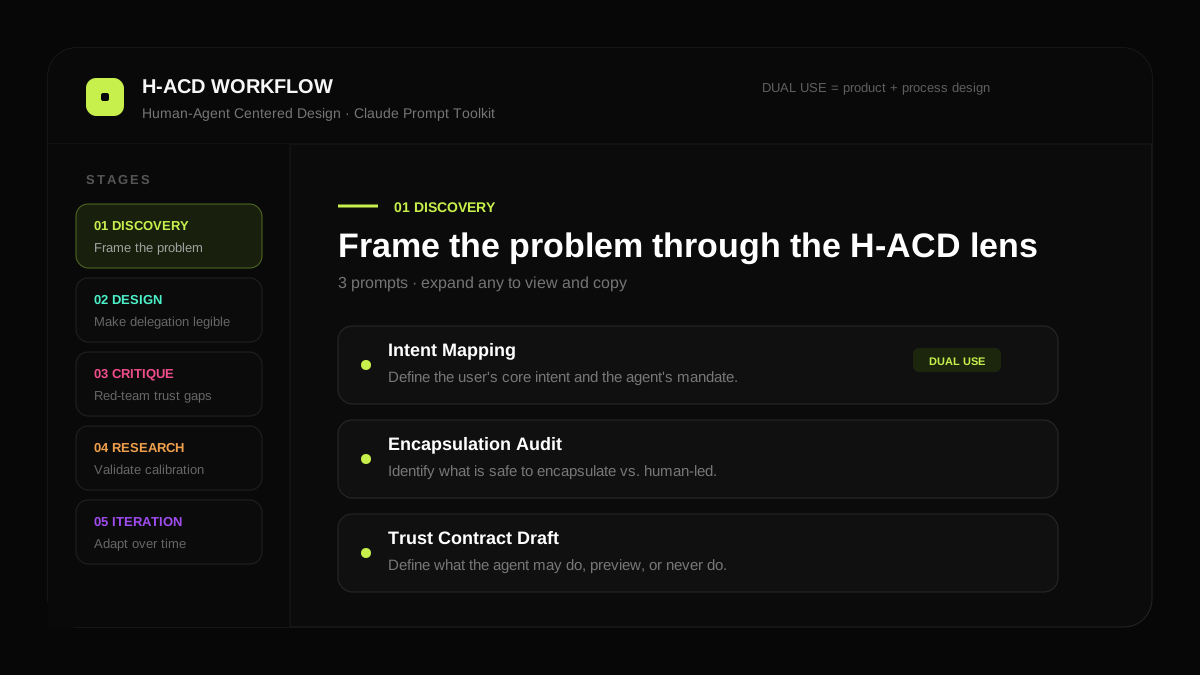
H-ACD Toolkit — Human-Agent Centered Design workflow
Turned Human-Agent Centered Design into a reusable prompt workflow for discovery, delegation, trust contracts, critique, research, and iteration across AI-assisted product work.
Read case study → -
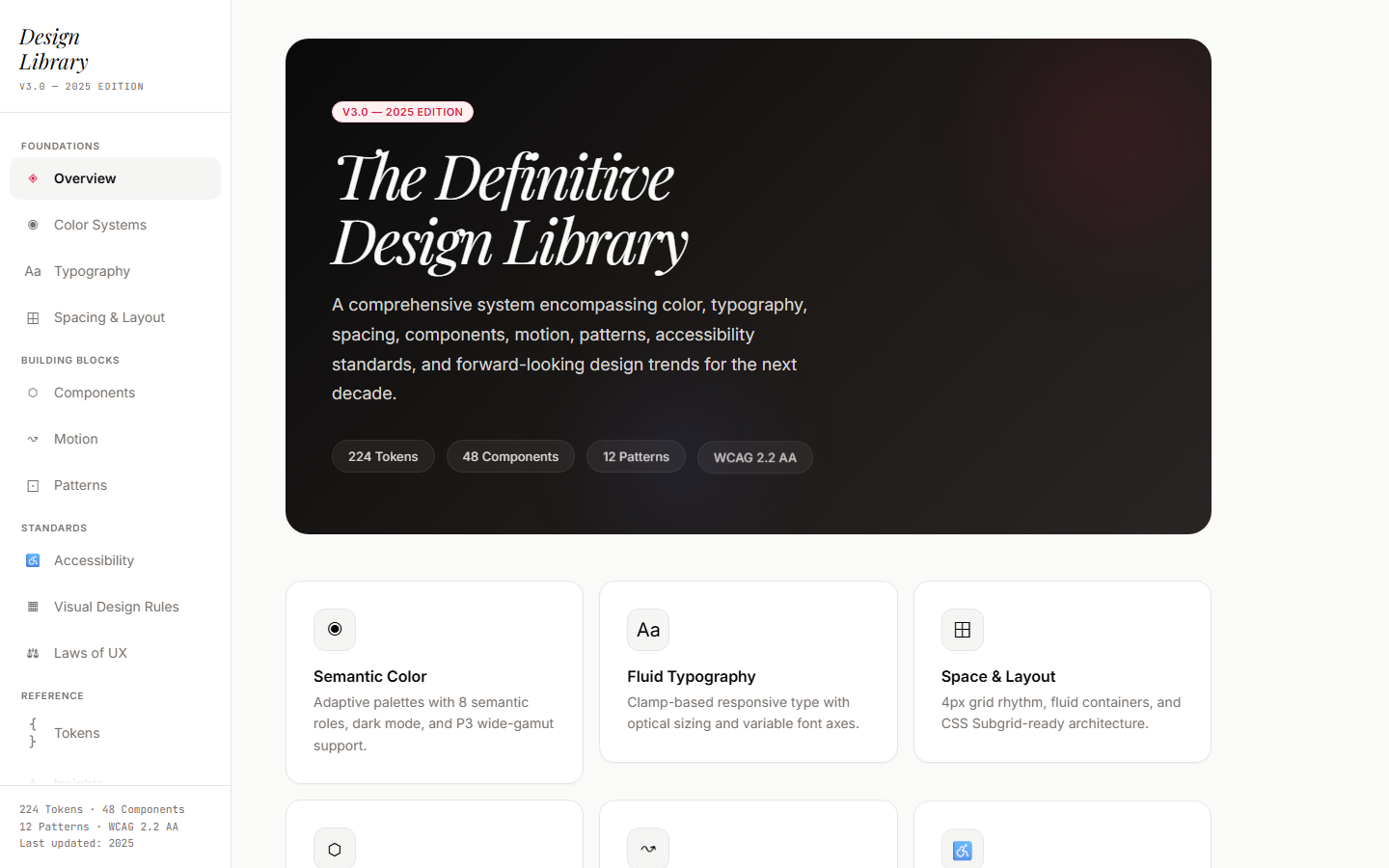
comp-design-library
A standalone Angular 19 site documenting reusable tokens, palette, typography, and patterns for the prototype system.
Read case study → -
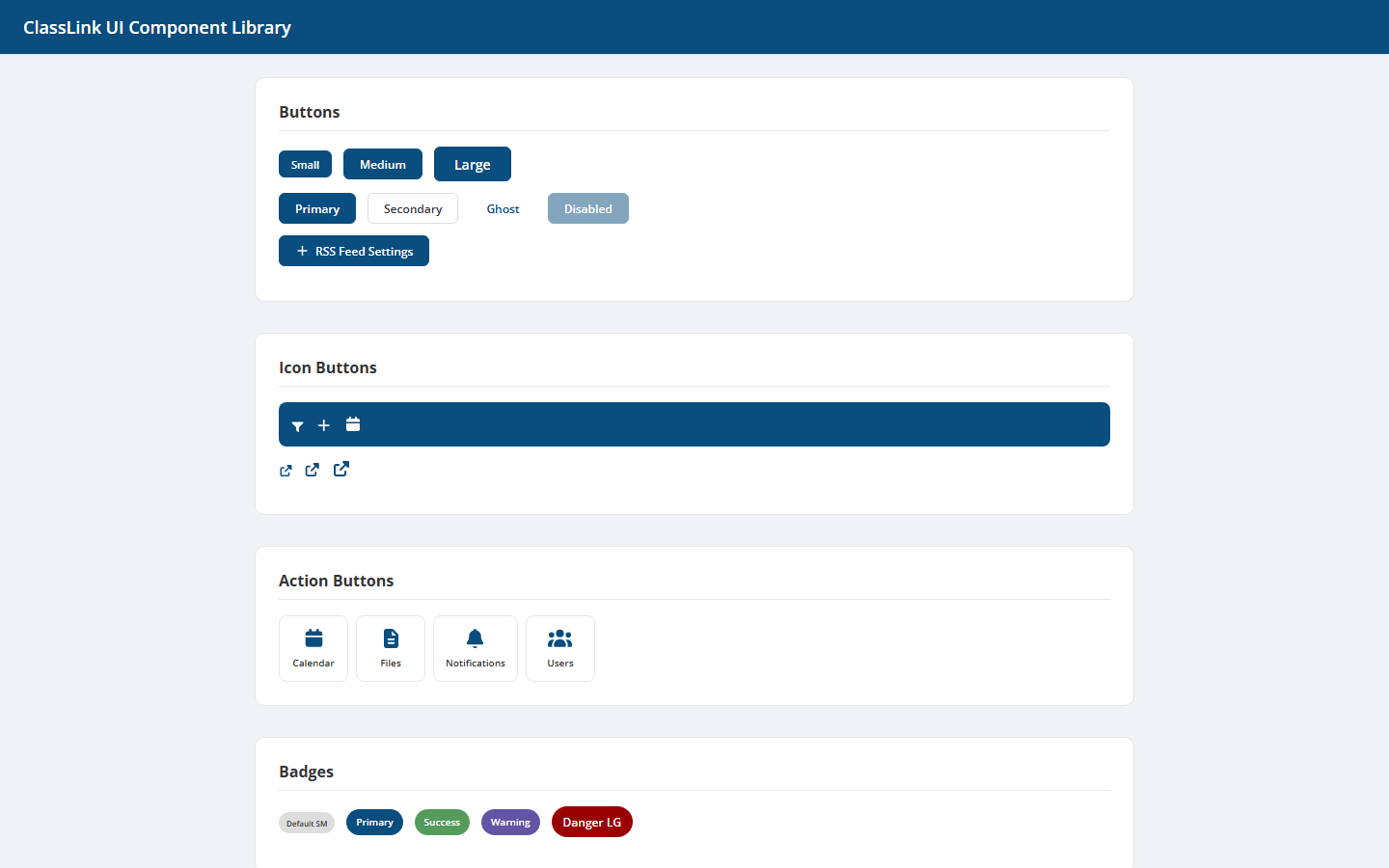
Widget Component Library — the substrate I haven't shipped yet
An Angular 21 component library with 26 dashboard primitives — stat cards, metric cards, chart widgets, feed items, status indicators. Packaged with ng-packagr, demoed in a sibling app, not yet consumed by anything else.
Read case study → -
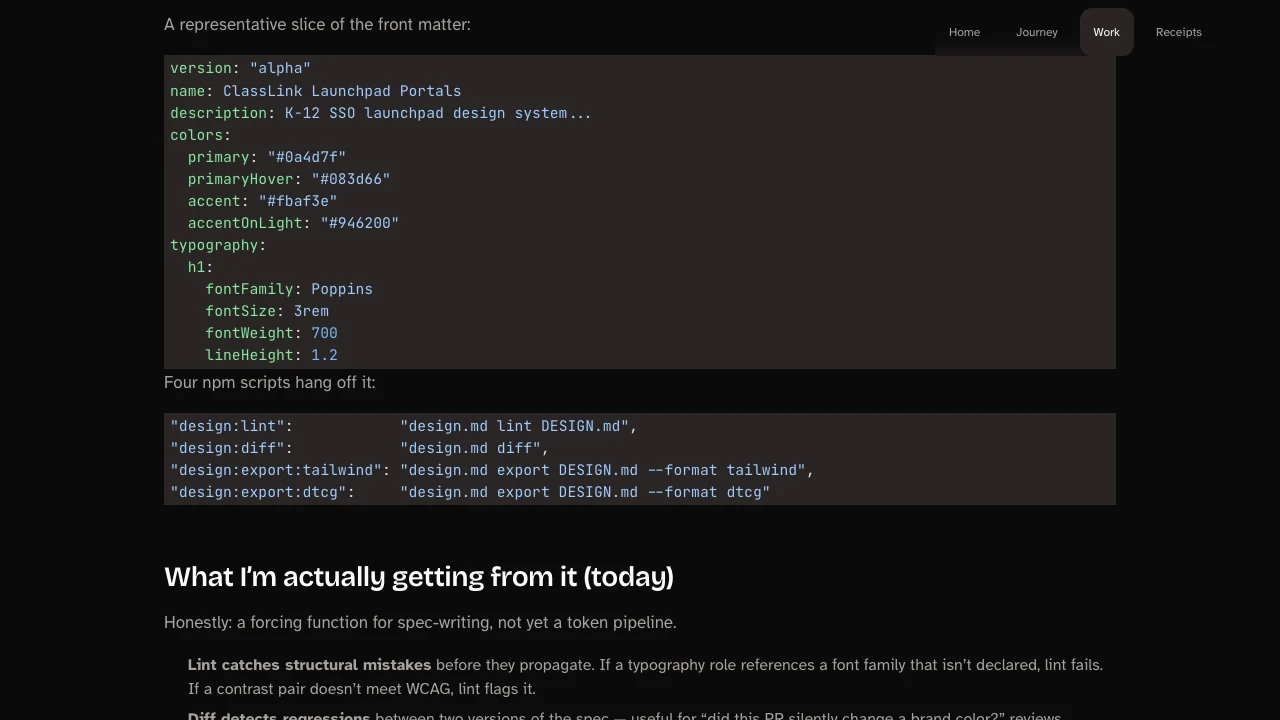
design.md — specifying the system before pipelining it
An early experiment with Google's @google/design.md tooling — a single 264-line spec that lints, diffs, and exports to Tailwind / DTCG. Lab-notebook entry, not a shipped pipeline.
Read case study → -
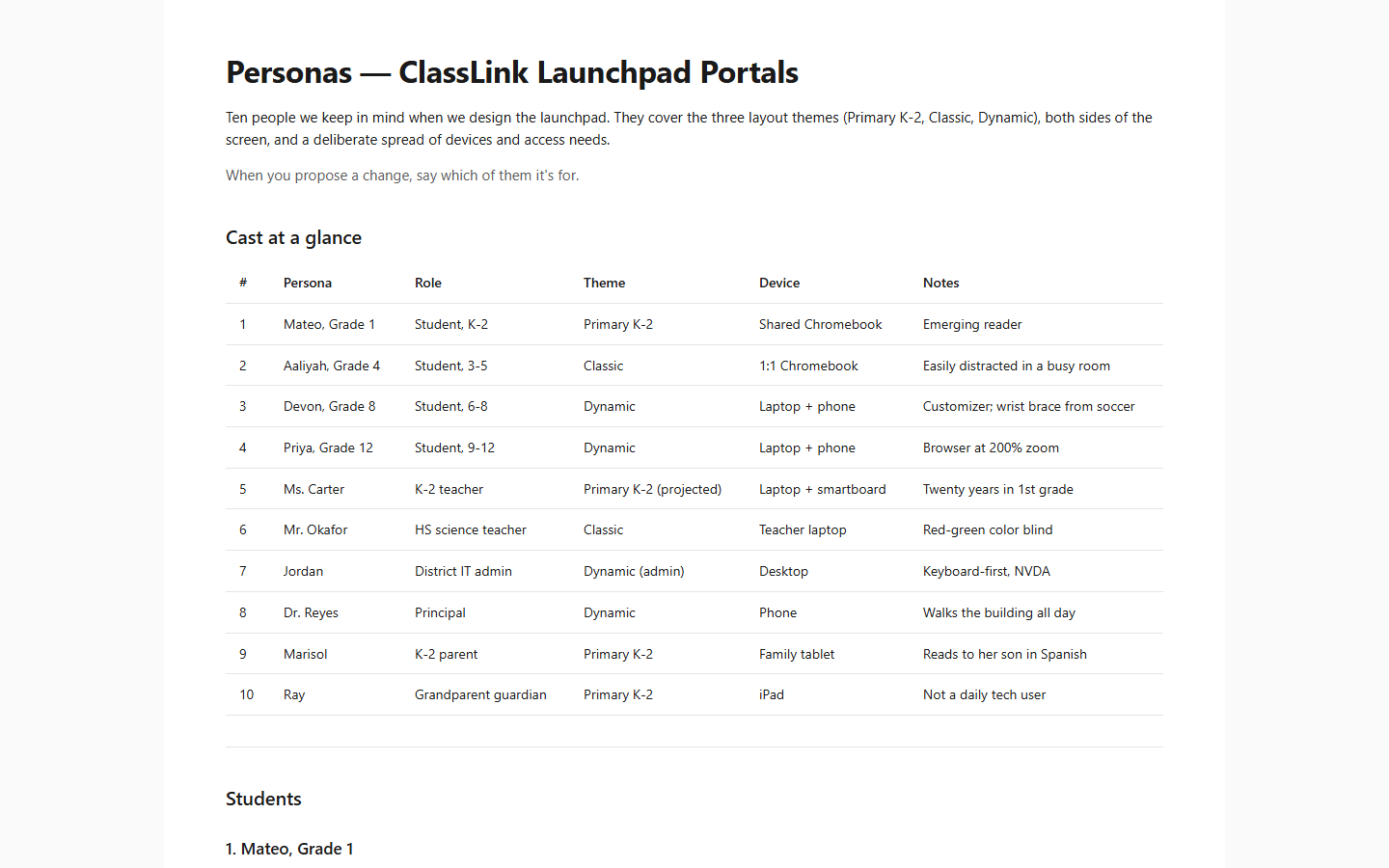
Synthetic Personas Pipeline — Walkthrough
One command extracts real user signals from PostHog, Linear, Gong, and protoapp-feedback, joins them on email/domain+role, clusters into archetypes, and synthesizes persona docs where every claim cites its evidence. Five phases, four data sources, zero fabricated numbers.
Read case study → -
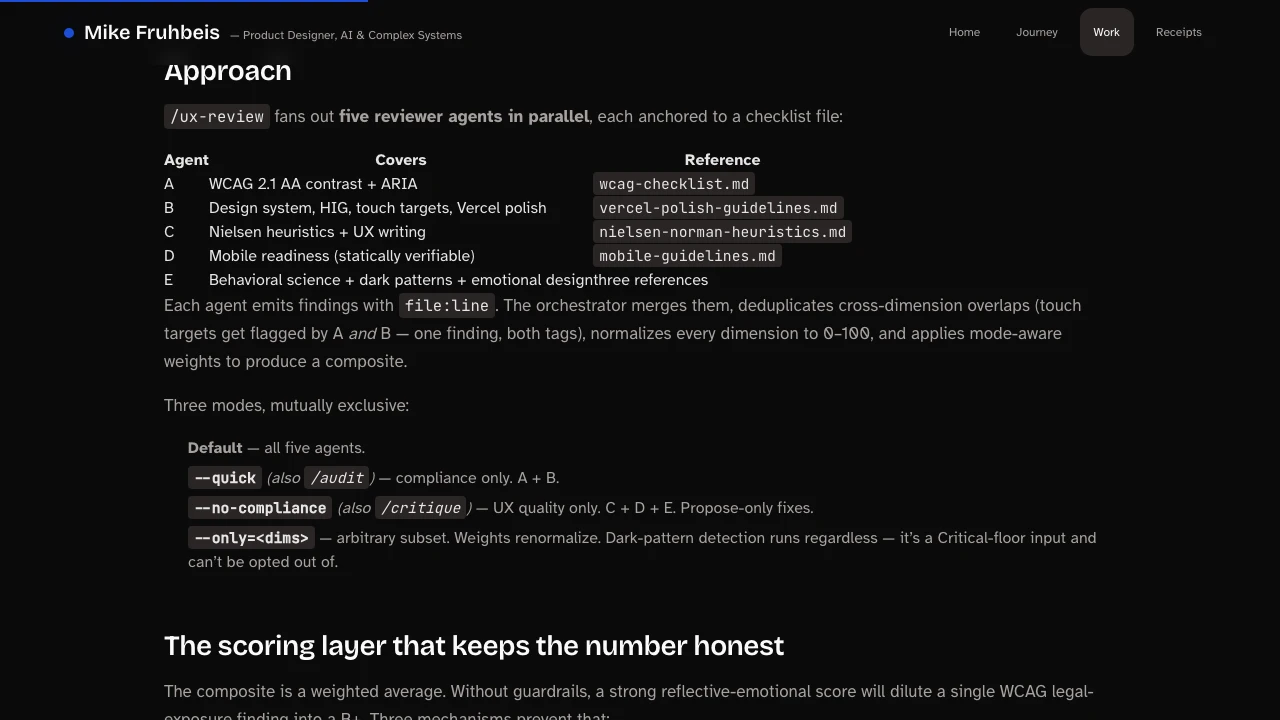
/ux-review — five reviewers in one pass
Parallel AI review system for usability, accessibility, design-system consistency, mobile readiness, and behavioral risk, producing a scored report and fix loop.
Read case study → -
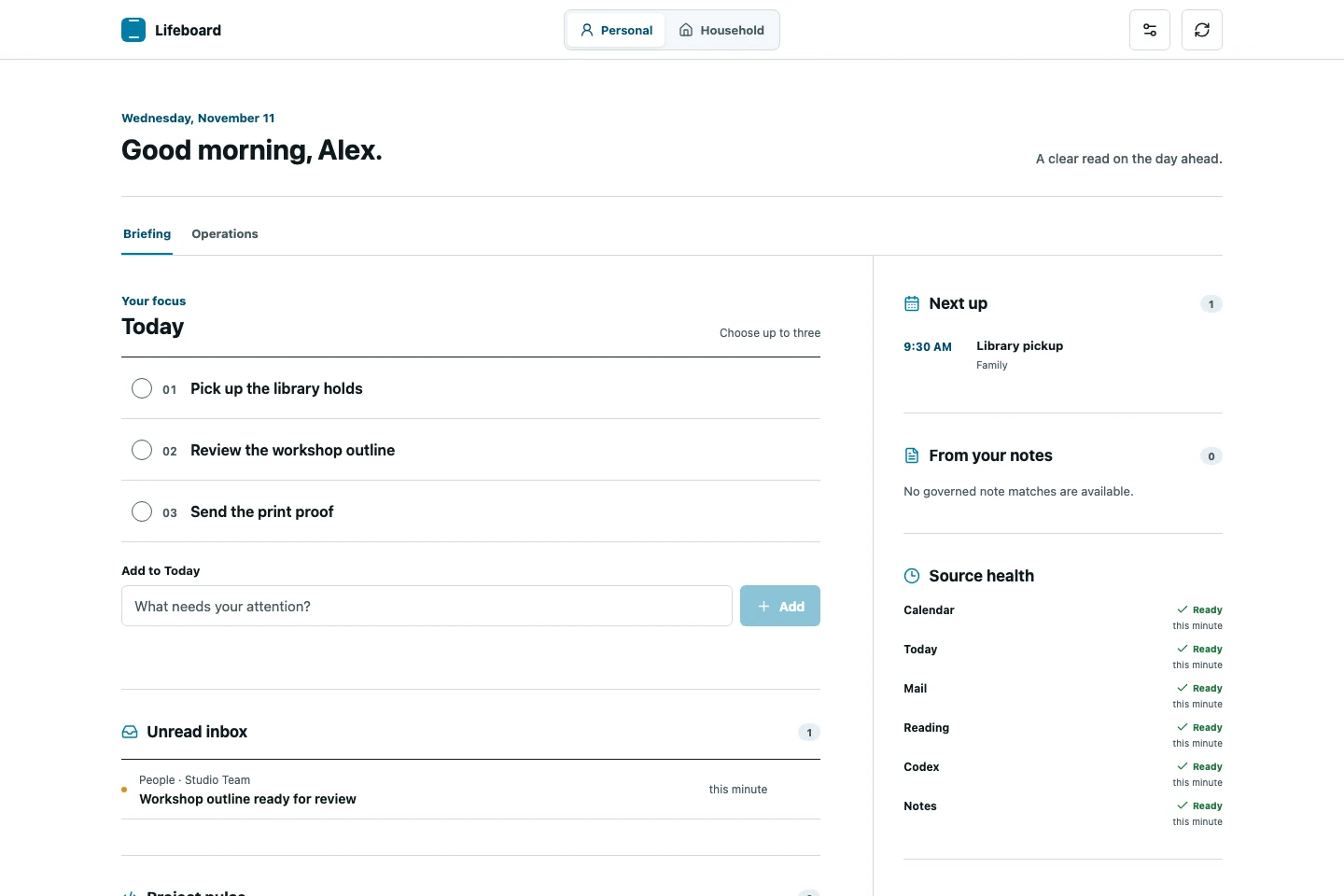
Lifeboard keeps a personal brief private
An independent local dashboard with a focused Today list, clear refresh states, and a Household view that receives only explicitly shared information.
Read case study → -
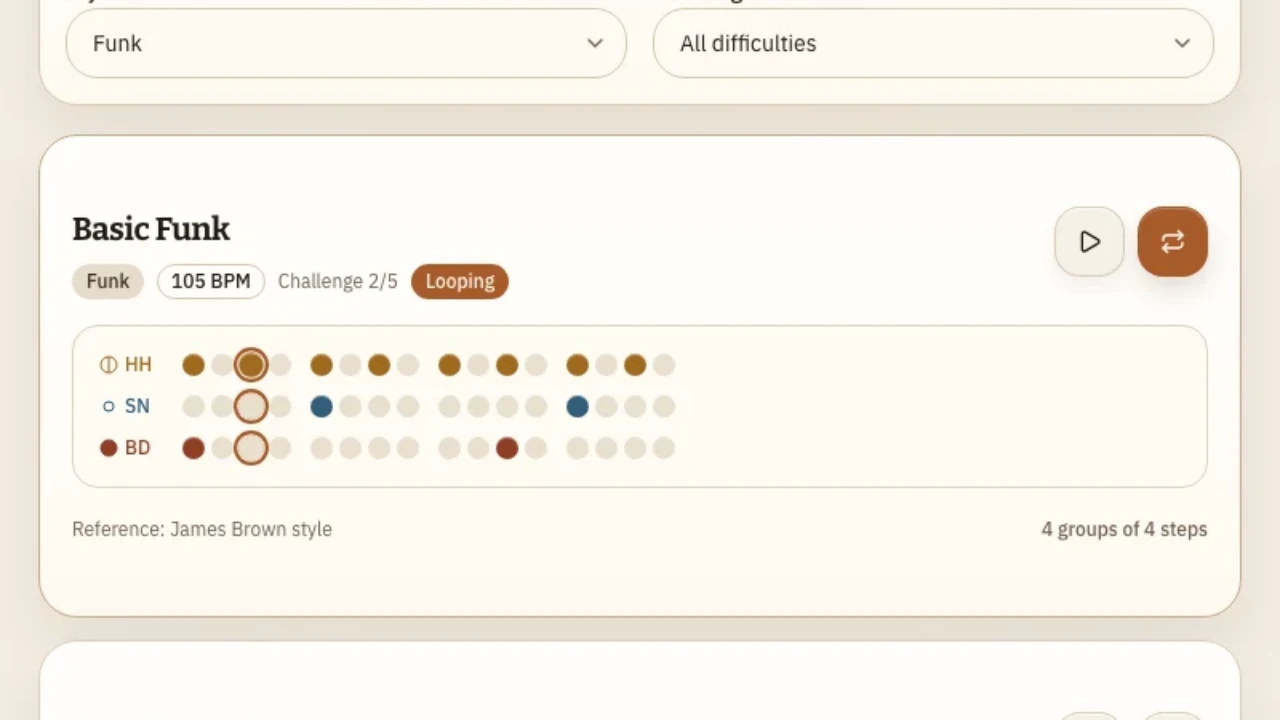
BeatTutor turns a groove into a practice loop
An independent mobile-first drum practice app that connects a visible beat pattern to audio playback and repeat practice.
Read case study →